

Lola -November 30, 2023
"Must Know" Pickleball Terminology
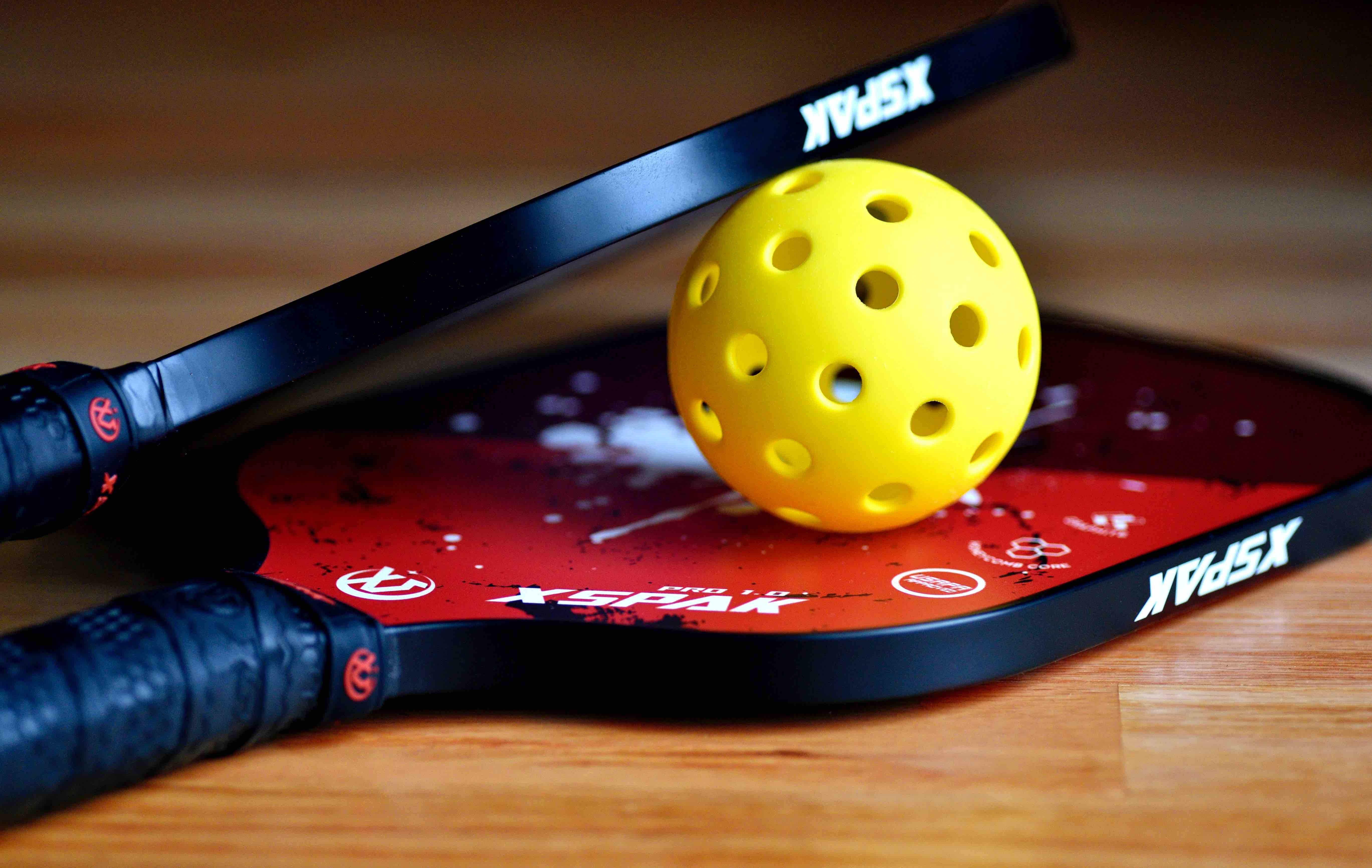
Mastering the language of pickleball is just as important as mastering the game itself. This blog provides an easy-to-understand guide to the most crucial terminology in the sport of pickleball. Whether you're a beginner just getting started or an experienced player looking to brush up on your pickleball lingo, this comprehensive guide will help you understand the terms and phrases commonly used in the game, making your experience on the court more enjoyable and effective. Get ready to dive into the world of pickleball language—and take your knowledge of the game to the next level.

Definition of Pickleball
Pickleball is a paddleball sport that combines elements of tennis, badminton, and table tennis. It involves two or four players who use solid paddles made of wood or composite materials to hit a perforated polymer ball over a net. Originating in the mid-1960s as a backyard pastime, pickleball has evolved into an organized sport represented by an international federation. The game boasts a diverse demographic of players due to its inclusive nature and can be played both indoors and outdoors on a court that resembles a scaled-down tennis court.

Brief History of Pickleball
The inception of pickleball is a tale rooted in family fun. The game was first invented in 1965 on Bainbridge Island, Washington by three fathers - Joel Pritchard, Bill Bell, and Barney McCallum. Their objective was to create a game that their kids could enjoy during the summer. The equipment comprised of ping-pong paddles and a wiffle ball, which led to the development of the game we know today. As for the unusual name, there are two theories: some believe it was named after the Pritchards' dog, Pickles, who would chase the ball and run off with it. Others mention that Joan Pritchard (Joel's wife) dubbed the game as 'pickleball' because it reminded her of a pickle boat, a term in rowing where the boat consists of leftover crew members.
Pickleball Terminology
Top 20 Pickleball Terms
Ace: A serve that is not returned by the opponent, resulting in a point.
Approach Shot: A shot hit with the intention of moving towards the net, typically executed deep into the opponent's court.
Backhand: A hit made on the non-dominant side of the player with the back of the paddle.
Baseline: The line at the back of the pickleball court.
Dead ball: A ball that is not in play.
Dink: A soft shot that is intended to arc over the net and land within the non-volley zone. Sometimes this is referred to as dink shot.
Double Bounce Rule: A rule stating that each team must play their first shot off the bounce. Sometimes referred to as the two bounce rule
Doubles Pickleball: Refers to a version of the game played with four players, two on each team, and it emphasizes communication, strategy, and skillful placement of shots.
Double Hit: An illegal action where the ball is hit twice consecutively by the same player or team during a single point play.
Drop Shot: A strategic shot that is hit softly to fall rapidly over the net, landing in the opponent's non-volley zone. Sometimes known as a drop shot volley.
Fault: Any action that stops play because of a rule violation.
Foot Fault: Stepping on or into the non-volley zone while volleying a ball.
Forehand: A hit made on the player's dominant side with the front of the paddle.
Groundstroke Shot: A type of shot where the player strikes the ball after it has bounced once on their side of the court.
Kitchen: Informal term for the non-volley zone.
Let: A serve that hits the net cord and lands in the correct service court. It is replayed without penalty.
Lob: A high, deep shot intended to go over the opponent and land near the baseline.
Non-volley zone: The 7-foot zone on both sides of the net. No volleying is permitted within this zone.
Outdoor Ball: A type of ball used specifically for outdoor pickleball games, typically featuring a durable, hard plastic shell designed to withstand various weather conditions and rougher outdoor surfaces.
Overhead Slam/Smash: A hard, overhand shot that forces the ball downward.
Poach: To cross over into your partner’s area to play a ball in doubles.
Rally: Continuous play that occurs after the serve and before a fault.
Rally Scoring: A method of scoring where a point can be won by the serving or receiving team.
Serve: The action that begins play.
Serving Team: The team that initiates the game by hitting the ball across the net to the opponent's side.
Sideline: The line that runs perpendicular to the net on both sides of the court.
Stacking: A strategy used in doubles where players align themselves to have the strongest player always hit from the right side.
Third Shot Drop: A strategic shot in pickleball, typically executed as the third shot of a rally, in which the ball is hit softly so as to fall into the non-volley zone, making it unattackable by the opposing team.
Volleys: Hitting the ball in the air, without letting it bounce.

Importance of knowing the terminology
Every new and experienced pickleball player should understand the key terms of pickleball. The key terms in pickleball define the rules, strategies, and actions within the game, serving as a common language that facilitates communication and understanding on the court. It is through this shared vocabulary that players can seamlessly coordinate their moves, discuss tactics, and engage in the game with clarity and precision. Additionally, as the sport continues to grow in popularity, this lexicon forms an integral part of the broader pickleball culture, fostering a sense of community among players worldwide.
Conclusion
Pickleball is more than just a sport; it's a lifestyle that incorporates physical fitness, strategic thinking, and social interaction. Practicing the sport not only helps in improving physical health but also fosters mental agility. The swift decision-making skills required during the game help in enhancing cognitive abilities, making it a holistic activity for well-being.
As the game necessitates coordination and cooperation, particularly in doubles play, it also promotes teamwork and builds strong social connections. The sport provides a platform for people from different walks of life to interact and form friendships, thereby contributing to the sense of community and camaraderie. The inclusive nature of pickleball, welcoming players of all ages and skill levels, further deepens its impact on social wellness.
In conclusion, pickleball is not just a game; it's an enriching experience that brings numerous benefits. The sport's fascinating blend of physical activity, strategic gameplay, and social interaction makes it a unique and engaging pursuit. Learning the terminology is the first step towards fully embracing the sport and becoming an integral part of the growing global pickleball community.